
Last updated November 14, 2026
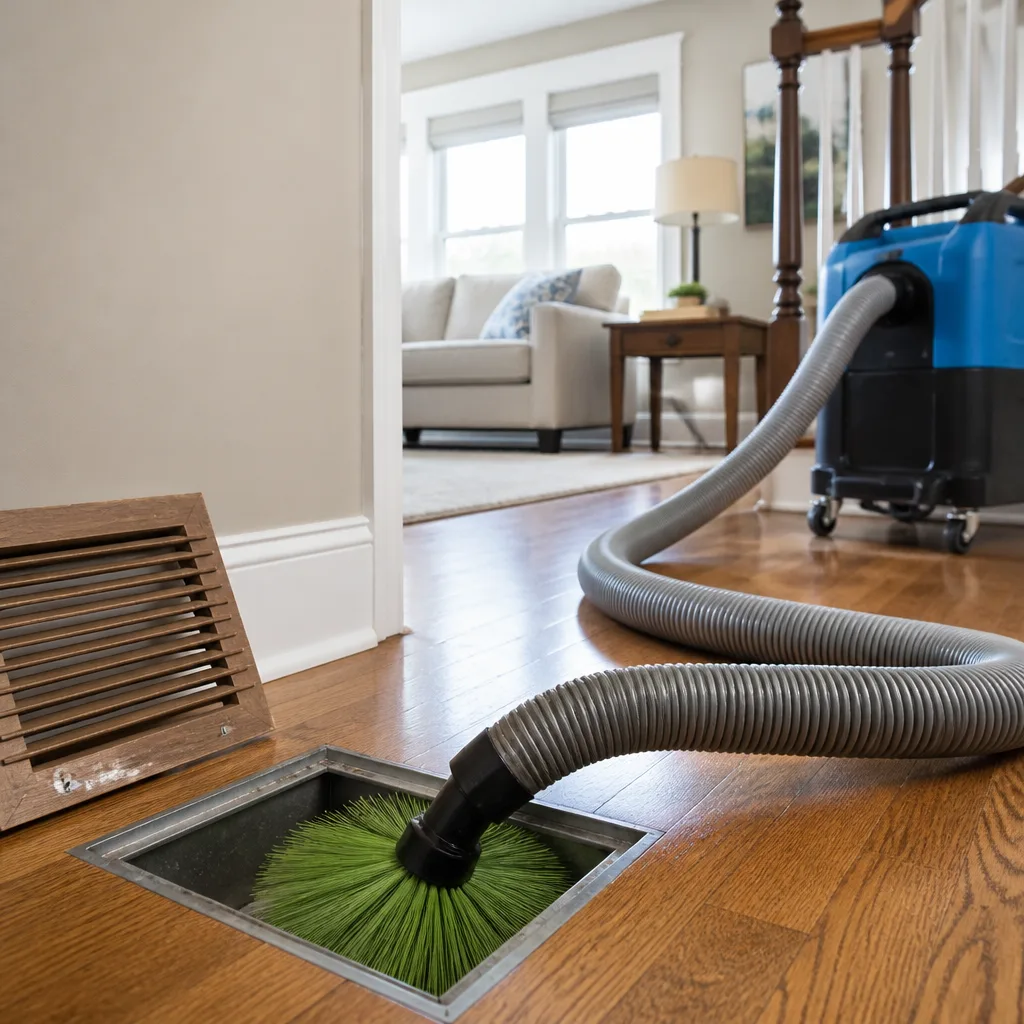 Whole-home duct cleaning
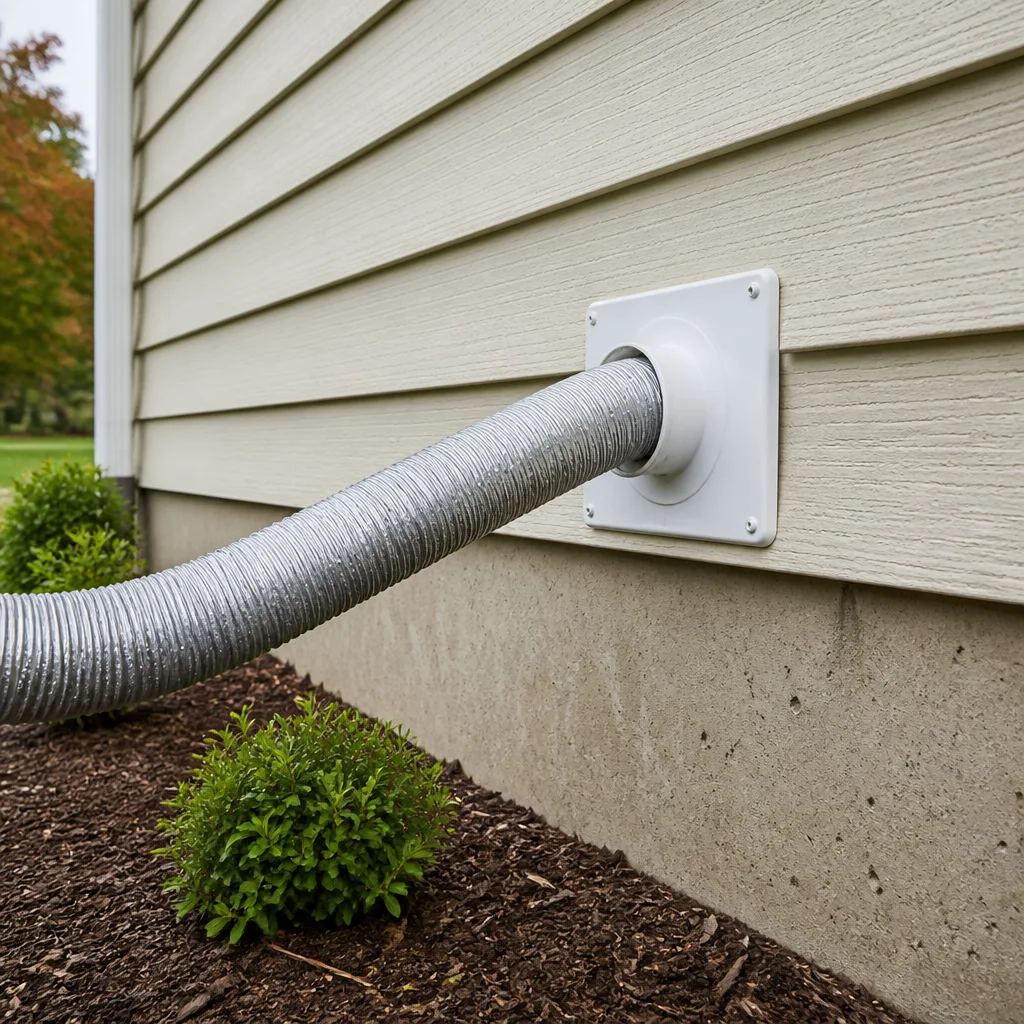 Dryer vent cleaning
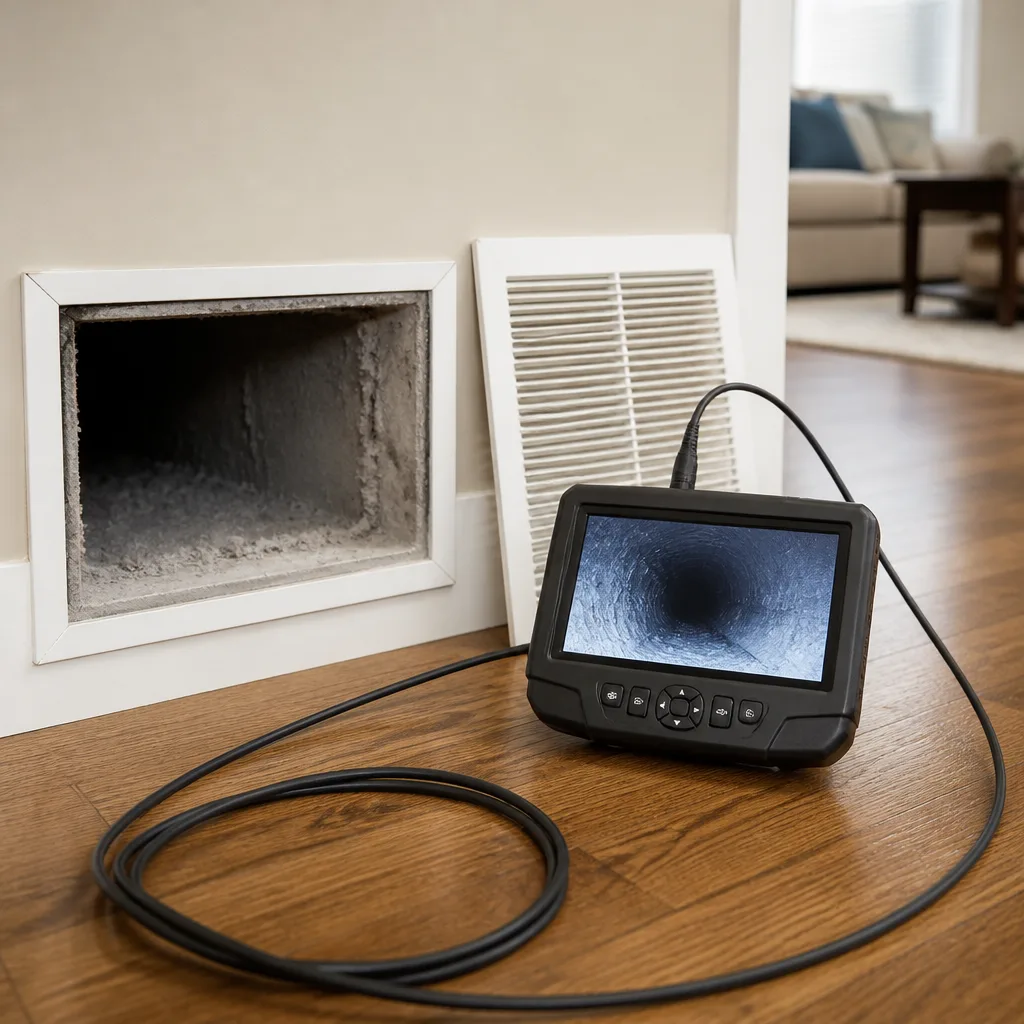 Camera inspection
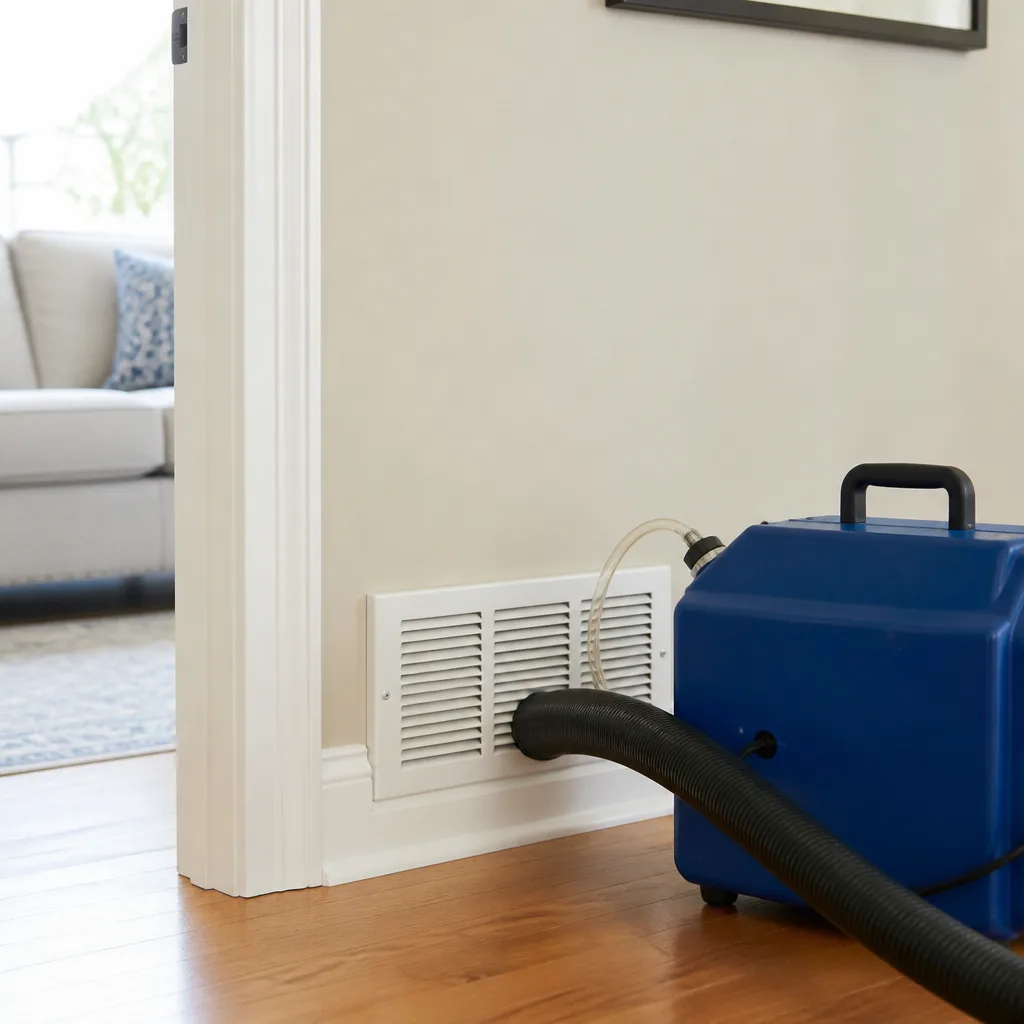 Sanitizing & deodorizing
Whole-system duct and dryer vent check with before-and-after photos - you see exactly what came out of your vents
That "$99 whole-house special" is a bait ad - the real number appears once they are in your hallway, or the "clean" is a shop-vac at the register. We photograph the inside of your ducts before and after instead.
Air Duct Cleaning Permits, Codes & Inspections in Killeen, TX: What You Need to Know
Here’s the part most homeowners don’t expect: the cleaning itself almost never needs a permit, but the repair work that a proper cleaning often uncovers does. If a technician cuts a new access panel into your ductwork or replaces a duct section and never mentions a permit, that’s not a favor. It’s an unrecorded modification that can complicate a future home sale or an insurance claim. In this guide we’ll draw the line between routine cleaning and permitted duct work in Killeen, explain when City of Killeen Building Inspections gets involved, and show you exactly what paperwork to ask for and keep.
Quick Answer
Air duct cleaning in Killeen, TX generally does not require a permit, because cleaning an existing system is maintenance, not construction. Duct repair, replacement, or modification – cutting new access panels, running new duct runs, or altering the mechanical system – can require a permit and inspection under Texas mechanical code as enforced by City of Killeen Building Inspections. The line sits at whether you’re cleaning what’s there or changing it.
Styles & brands we work with
- Whole-home duct cleaning
- Dryer vent cleaning
- Camera inspection
- Sanitizing & deodorizing
Table of Contents
- Does Air Duct Cleaning Require a Permit in Killeen?
- How Texas Mechanical Code Applies to Duct Repair vs. Duct Cleaning
- When City of Killeen Building Inspections Gets Involved
- Fort Hood Housing: On-Post vs. Off-Post Inspection Authority
- What Documentation to Request and Keep After Duct Work
- How Permits Protect You, Not Just the Contractor
- What an Inspection Actually Looks At
- Common Mistakes to Avoid
Does Air Duct Cleaning Require a Permit in Killeen?
The short answer is no, and it’s worth understanding why. A permit is a legal record that construction work was planned, reviewed, and inspected. Cleaning a duct system that’s already installed changes none of that. You’re removing dust, debris, and buildup from a system whose layout and components were already approved when the home was built or last remodeled. There’s no new construction to review.
What does require a permit is the work that sometimes follows a cleaning. When we run air duct cleaning on a Killeen home, we regularly find disconnected joints, crushed flex runs in the attic, or duct sections that have pulled apart at the seams. Fixing those is repair. Replacing a run of ductwork, adding a new supply register, or cutting an access opening into a rigid trunk line are modifications to the mechanical system. Those can fall under the permit threshold.
The reason this matters in Killeen specifically is the housing mix. A lot of homes here were built quickly during growth spurts, and attic ductwork in a Central Texas house takes a beating from heat. Flex duct that’s been baking in a 140-degree attic for years gets brittle and sags. When a cleaning uncovers a collapsed run, the honest fix is a repair, and a repair may need a permit.
Which jobs sit on which side of the line
- No permit typically needed: cleaning supply and return ducts, cleaning the blower compartment, cleaning the air handler, dryer vent cleaning, sealing small accessible joints, replacing a filter.
- Permit may be needed: cutting a new access panel into rigid trunk line, replacing a section of duct, adding a new supply run or register, altering the size or routing of existing ductwork, connecting a new air handler to existing duct.
When in doubt, the answer isn’t for a duct cleaner to decide alone. It’s to call City of Killeen Building Inspections and ask a direct question: “I’m planning to replace this duct section – does that need a permit?” A two-minute phone call settles it before any tool comes out.
How Texas Mechanical Code Applies to Duct Repair vs. Duct Cleaning
Texas adopts the International Mechanical Code through the state’s process, and municipalities like Killeen enforce it locally through their building department. The code governs the installation, alteration, repair, and replacement of mechanical systems – which includes ductwork, because ductwork is part of the mechanical system. Cleaning isn’t in that list. Alteration and replacement are.
The distinction the code draws is between work that maintains an approved system and work that changes it. Routine maintenance – cleaning, filter changes, minor sealing – keeps the system within its original approval. Alteration changes the physical system: new components, new routing, new openings in structural or fire-rated assemblies. That’s where the code kicks in.
Where the line actually sits
The clearest test is whether the work creates a new physical condition in your home. Ask yourself three questions:
- Are we adding something that wasn’t there? A new register, a new run, a new access opening – yes, that’s an addition.
- Are we removing and replacing something structural to the system? A duct section is part of the mechanical layout. Replacing it changes the system.
- Are we making the system work differently? Routing ductwork differently, changing sizes, adding a zone – the system is no longer what the original approval covered.
If the answer to any of those is yes, assume a permit conversation is on the table. If all three are no and you’re just cleaning what’s already there, you’re in maintenance territory.
We’re careful about this in our own work on Killeen homes. When an inspection uncovers a duct failure, we don’t just start cutting. We document what’s wrong, walk the homeowner through the options, and are clear about which options might require a permit. That transparency is why we use equipment that lets us actually see inside the system – Rotobrush rotary brush systems get the interior of a flexible duct fully visible, and Nikro HEPA vacuums hold what we pull out so we can show you exactly what we found. Proof over promises.
When City of Killeen Building Inspections Gets Involved
City of Killeen Building Inspections gets involved when a permit has been pulled and the work is ready for a codes inspection, or when someone files a complaint about work done without one. For duct work, the trigger is almost always a permit application for a mechanical alteration – replacing a significant portion of the duct system, installing a new air handler, or reconfiguring the layout.
The threshold here is practical rather than mysterious. Small maintenance items don’t trigger a visit. Structural changes to the mechanical system do. A single duct section replacement might or might not require a permit depending on how the work is classified; a full system replacement or a layout change almost certainly does.
What usually triggers an inspection
- Mechanical permit pulled for duct replacement or a significant repair
- New air handler or HVAC system installation that connects to existing ductwork
- Ductwork that penetrates a fire-rated assembly, like a garage-to-house wall
- A complaint from a buyer’s inspector or a neighbor during a remodel
The best move before any duct repair is to call City of Killeen Building Inspections directly. Ask whether the specific work you’re describing needs a permit. Ask what documentation they’d want. Ask what the inspection covers. Nobody at the city is trying to make duct repair harder – they’re trying to make sure the record matches reality. When we do duct repair in Killeen, we’d rather ask the city three questions upfront than have a homeowner discover a paperwork gap at closing.
Fort Hood Housing: On-Post vs. Off-Post Inspection Authority
Killeen is a military town, and that changes the permit picture. If you live on Fort Hood, you’re not under City of Killeen jurisdiction for building permits – the installation’s own facilities and engineering authority handles construction, alteration, and inspection on federal property. If you live off-post in Killeen, you’re under the city’s building department like any other homeowner. Same ductwork, two different authorities.
On-post housing also involves a third party: privatized military housing management. If you’re in on-post family housing, repairs typically go through the housing maintenance office first, and any significant duct work gets coordinated between that office and the installation’s engineering staff. The housing office controls access and approval; the installation controls the code compliance. A cleaning crew showing up to work on an on-post home needs authorization from the housing office before touching anything.
Off-post Killeen homeowners
Off-post, the process is more direct. You own the ductwork, you hire the contractor, you pull the permit if one is required, and City of Killeen Building Inspections signs off. The complication is that a lot of off-post Killeen homes near Fort Hood change hands frequently as service members get orders. That means a paper trail matters more here than in a typical housing market – every duct modification should leave a document behind, because the next buyer is going to ask.
The practical takeaway: know which authority you’re under before you hire anyone. If you’re on-post, ask the housing office who coordinates the work. If you’re off-post, the city is your authority, and any duct repair that requires a permit should be pulled through City of Killeen Building Inspections. Trying to run it the other way – pulling a city permit for on-post work, or doing on-post work without installation approval – creates a record that doesn’t match the property.
What Documentation to Request and Keep After Duct Work
Every duct modification should leave behind a paper trail, and it should include at least three things: a scope of work, before-and-after documentation, and permit or inspection records when applicable. If any of those is missing after the job, ask for it before you pay the final invoice.
The documentation checklist
- Written scope of work. What was cleaned, what was repaired, what materials were used, and what was left alone. A one-line invoice is not a scope of work.
- Before-and-after photos. Interior photos of the ductwork being serviced. A proper crew photographs the insides of the ducts, not the outside of the registers.
- Permit number and inspection sign-off (if a permit was pulled). The permit number ties the work to a city record. Keep a copy.
- Materials list. If new duct sections, sealant, or filtration components were installed, note the manufacturer and model. This matters if you ever file a warranty claim.
- Contractor name and contact. The company that did the work, not just a phone number. This goes in your home file.
- Date of service. Sounds obvious, but the number of homeowners who can’t say when their ducts were last serviced is high, and it matters for scheduling and for resale disclosure.
These are the records that answer the hard questions later. When a buyer’s inspector finds a duct modification and asks for proof it was done properly, you hand over a permit number and a photo set. When an insurer wants to know whether water damage in the attic came from a failed duct run, you have a materials list and a service date. Keep the file digital and keep the paper. One folder in your closing documents costs you nothing and saves a lot of explaining.
The documentation gap is also the trap in a hasty job. A crew that skips the photos is often a crew that skips something else. When we clean ducts in Killeen, we bring HEPA vacuums and containment gear that cost real money, and we bring the photographic record because we want you to see the work. Three months later, that photo set is the only proof that the work happened at all.
How Permits Protect You, Not Just the Contractor
Permits protect the homeowner far more than they protect the contractor. A permit creates an independent record – the city’s – that the work was reviewed and inspected against a code standard. Without that record, you have a verbal promise and an invoice. With it, you have evidence.
Here’s where it plays out in real scenarios. When you sell the house, disclosure rules require you to disclose known material defects and any work that altered the property. An unpermitted duct modification is an alteration without a record. A buyer’s inspector finds it, flags it, and suddenly you’re negotiating against a perceived problem even if the work was fine. A permit number turns that from a question mark into a documented fact.
Insurance claims follow the same logic. If a duct failure causes water damage or a fire-related claim, the insurer will want to know whether the system was properly maintained and whether any work on it was permitted. An unrecorded modification gives them a reason to dig. A permitted one closes the question.
And there’s the contractor liability question. If a technician cuts into your ductwork without a permit and something goes wrong, the contractor’s insurance carrier will care about one thing first: was the work authorized and inspected? If the answer is no, the contractor may still be liable, but their insurer has more room to push back. A permit reduces that risk for both of you.
What permits don’t cover
A permit doesn’t guarantee good workmanship. It guarantees the work was reviewed against a code minimum. That’s why documentation matters alongside the permit – photos of the actual installation, a materials list, and a service record at least tell you what was done. Use the permit as one layer of protection and the documentation as another.
What an Inspection Actually Looks At
An inspection looks at whether the installed work matches the approved plan and meets code minimums: materials, connections, supports, sealing, and clearances. The inspector is checking physical conditions, not the quality of your air. Knowing what they’re looking at helps you understand why a duct repair done without a permit can quietly fail that check later.
What inspectors typically review
- Materials. Is the duct material approved for the application? Flex duct, rigid duct, and duct board each have specific approved uses, and some materials can’t be used in certain locations.
- Connections. Are joints sealed and mechanically fastened? Loose or taped-only connections are one of the most common failures we see during cleaning, and an inspector will look for them.
- Supports. Is the duct supported at the required intervals? Sagging flex duct that’s been holding water or pushing through insulation is a support problem as often as a materials problem.
- Clearances. Is the duct a safe distance from heat sources, and are there proper clearances where ductwork passes through rated assemblies?
- Sealing at the air handler. Are the plenum connections sealed? Air leaks at the air handler are one of the most common efficiency losses in a home.
This list is also a checklist for what good duct repair looks like. When we do repair work, we can recommend filtration upgrades at the same time – Honeywell and Aprilaire products are designed to integrate with an existing system, and if the air handler is already open for a repair, adding proper filtration is the natural moment. That’s the kind of work an inspector sees and signs off on, because the system is coherent instead of piecemeal.
What inspectors don’t do is verify that the work inside a duct run is clean. That’s a different standard entirely, and it’s why cleaning and repair pair the way they do. Cleaning shows you what’s inside. Repair fixes what’s broken. An inspection confirms the fix complied with code. All three produce a durable record.
Common Mistakes to Avoid
- Assuming duct cleaning needs a permit. It doesn’t. What needs one, sometimes, is the repair that follows. Ask specifically about the repair, not the cleaning, and you’ll get a more useful answer from City of Killeen Building Inspections.
- Skipping the permit because “it’s just a small repair.” If the repair involves a new access opening, a new duct run, or replacing a duct section, small is relative. Two minutes on the phone with the city is cheaper than two hours of explanation at closing.
- Accepting a verbal scope of work. A one-line invoice that says “duct cleaning” is not documentation. Ask for the written scope with materials, dates, and photos before you pay.
- Hiring a crew without asking about equipment. PCP and containment failures are the reason some jobs leave more contamination behind than they remove. Ask what vacuum system and containment equipment a crew brings, and expect specific answers – names like Rotobrush and Nikro and Abatement Technologies, not “we’ve got good stuff.”
- Treating on-post and off-post Killeen housing the same way. They have different authorities. On-post, the housing office and installation engineering coordinate the work. Off-post, the city does. Mixing the two creates a record that doesn’t match the property.
- Letting a buyer’s inspector be the first to find out. If you’re off-post in Killeen and plan to sell, get any duct modification documented with a permit now, not after an offer is on the table.
- Forgetting the dryer vent. A dryer vent cleaning is a safety service, not just a lint removal. A clogged vent is a fire risk, and a repair that reroutes a dryer vent may also fall within permit territory depending on the change.
See the difference
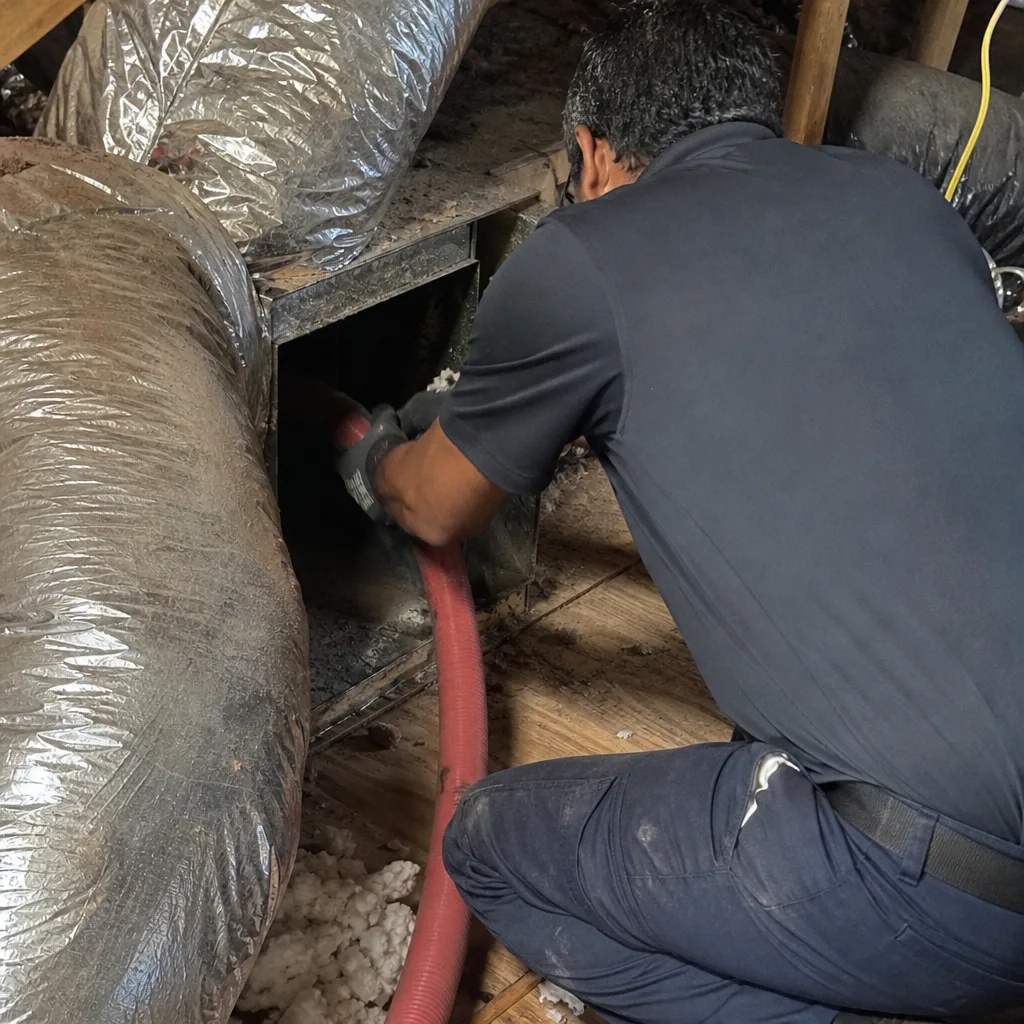 Before
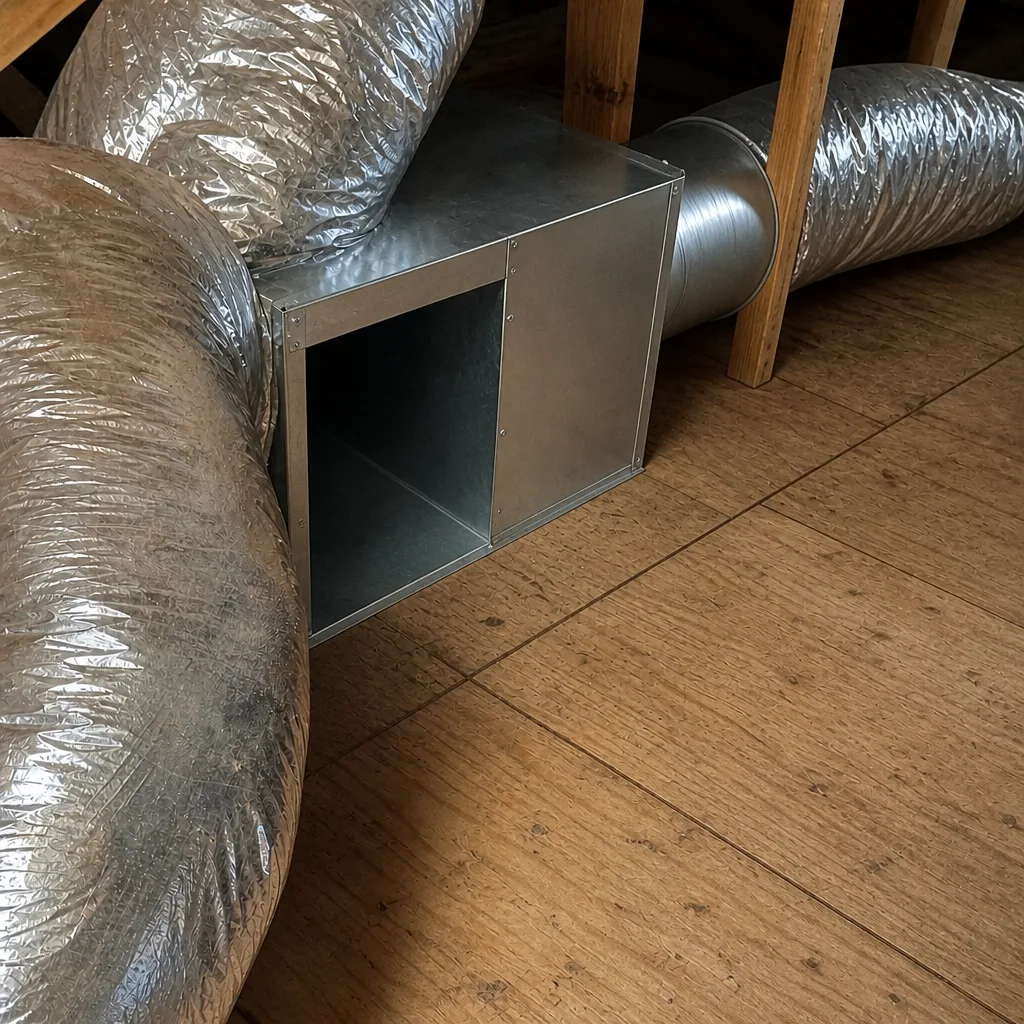 After
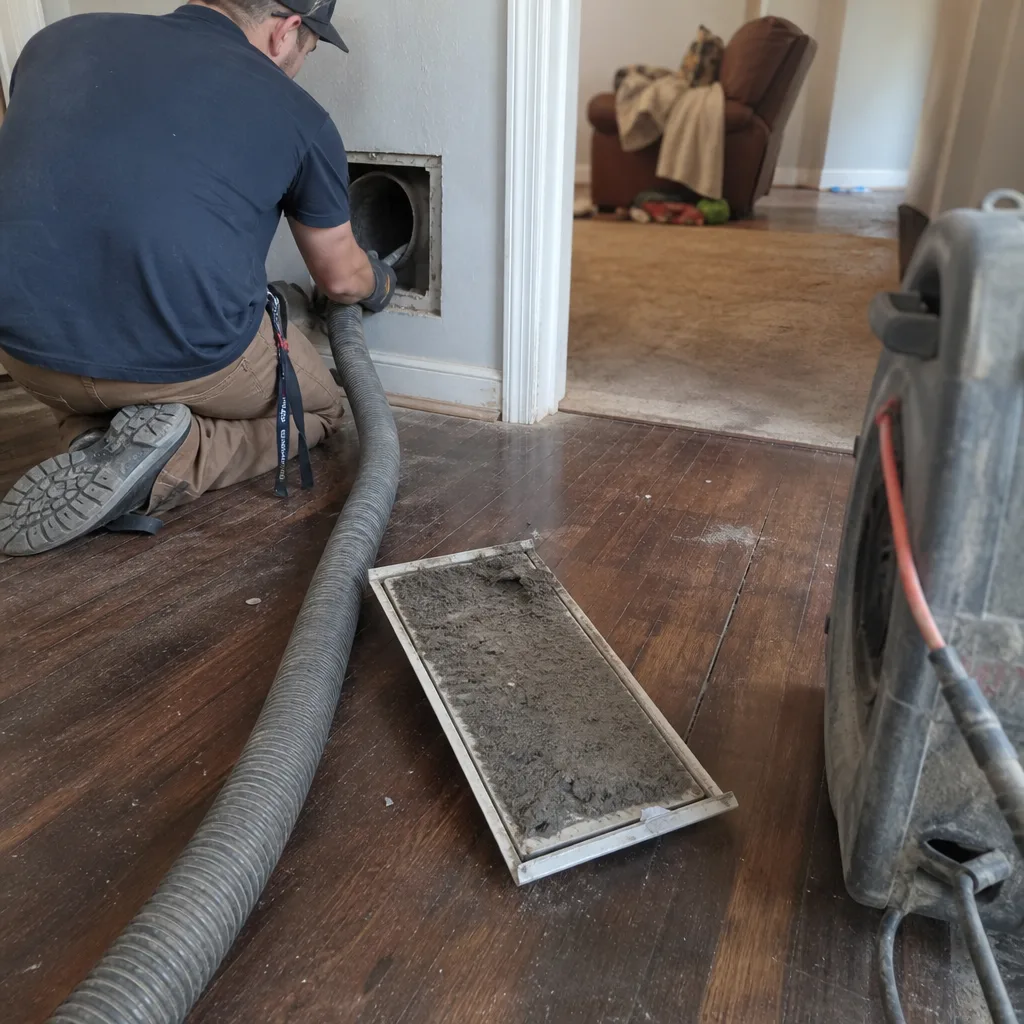 Before
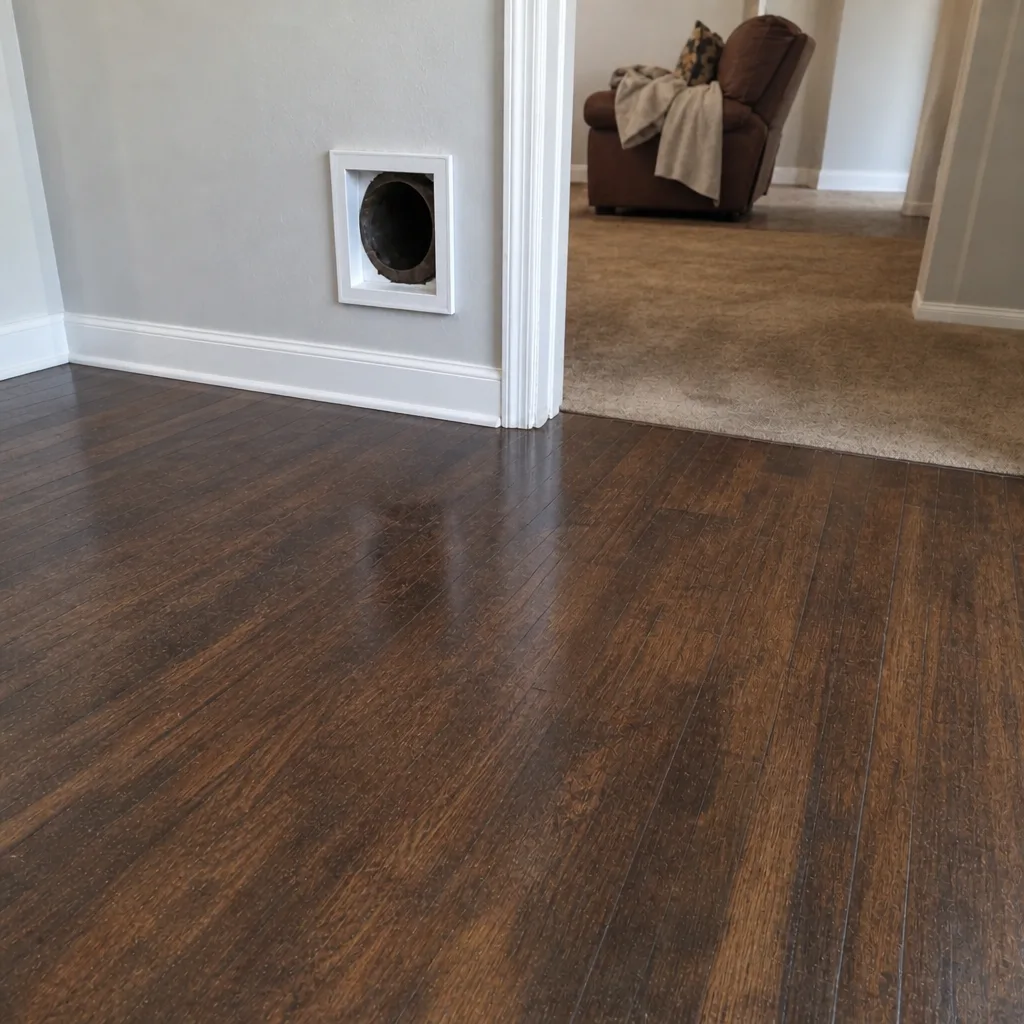 After
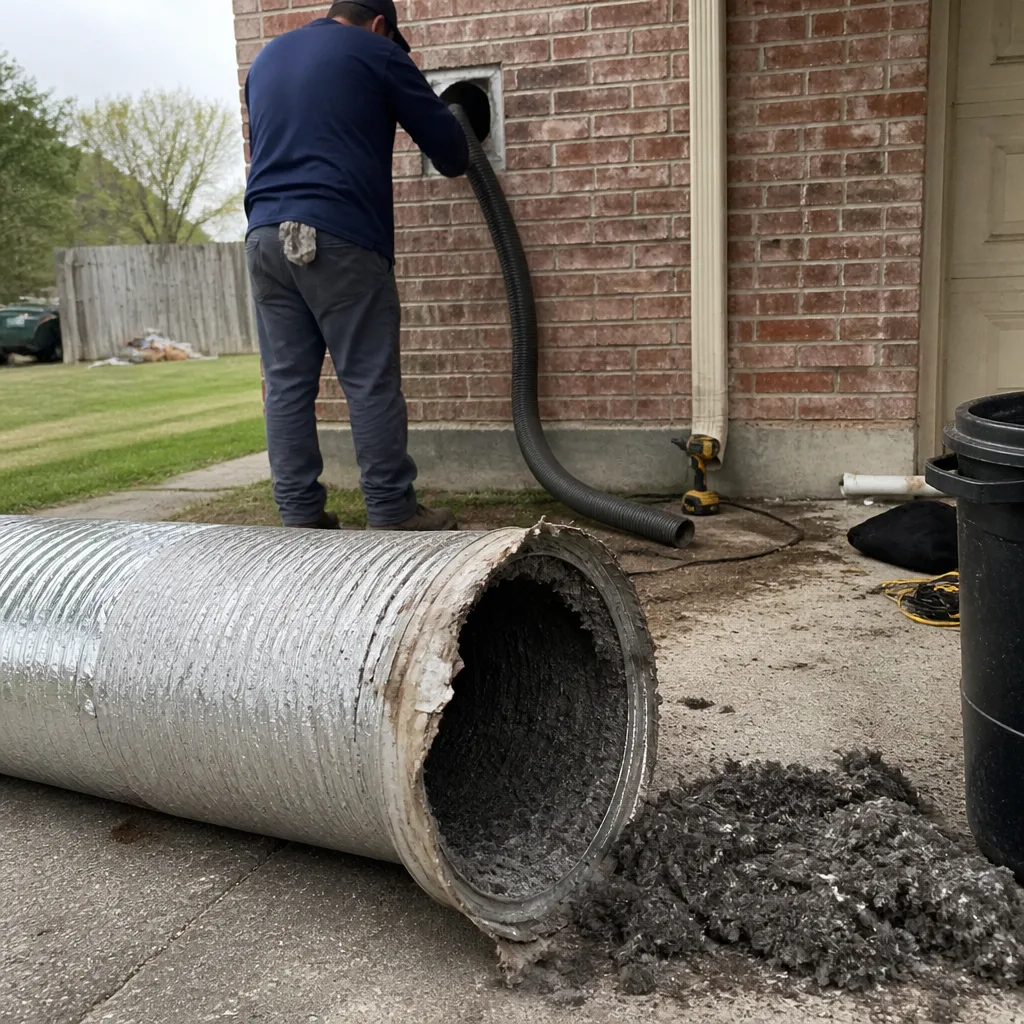 Before
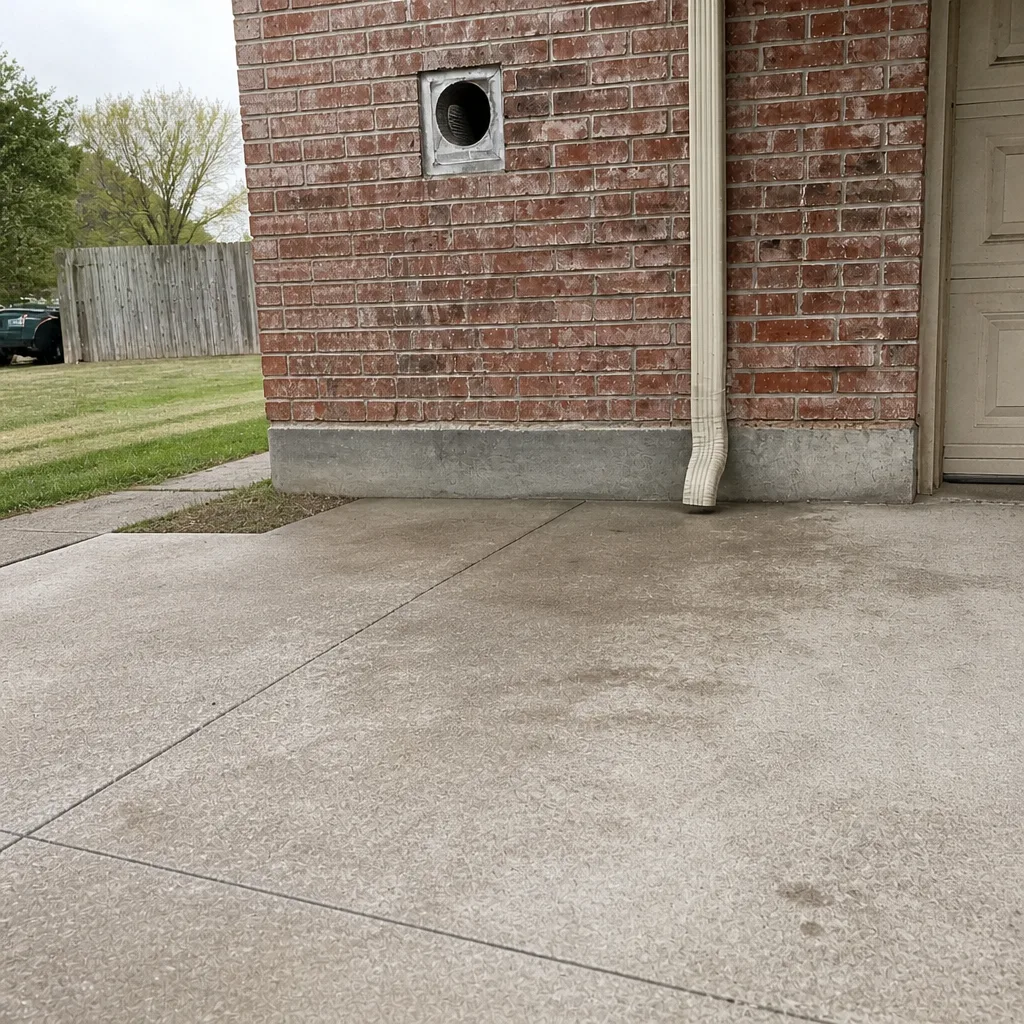 After
When to Call a Professional
Call a professional when the work involves anything more than cleaning an accessible system. If a duct run is disconnected, crushed, or leaking, that’s repair territory and the assessment needs a trained eye. If your HVAC system has never been cleaned and you’re seeing uneven airflow or noticing dust settling shortly after a filter change, it’s worth an inspection. If a home inspector or buyer’s inspector has flagged ductwork, get a second opinion from specialists before you accept their description. And if a contractor proposes a duct modification but hasn’t mentioned a permit, that’s the moment to ask.
Duct Cleaning Killeen offers free estimates in Killeen – call (833) 754-6799. We answer 24/7. Fast dispatch from 7am to 7pm, Sunday through Friday. Duct Cleaning Killeen combines cleaning and repair under one scope of work, uses commercial-grade equipment, and can tell you plainly whether the work you need might require a permit. We clean it, we can fix it, and we document it.
Frequently Asked Questions
No. Routine air duct cleaning does not require a permit in Killeen, because cleaning an installed system is maintenance, not construction. What can require a permit is a duct repair or modification that follows a cleaning – replacing duct sections, cutting new access panels, or altering the layout. If you’re not sure which category your job falls into, call City of Killeen Building Inspections and ask about the specific repair, not the cleaning. Call (833) 754-6799 for a free estimate.
It depends on which side of the fence your home is on. On-post Fort Hood housing operates under the installation’s own engineering authority, and any significant duct work gets coordinated through the on-post family housing office. Off-post Killeen housing operates under City of Killeen Building Inspections like any other private home. The two authorities don’t overlap, so know which one applies to your address before you hire anyone.
Keep the written scope of work, before-and-after photos of the duct interiors, the materials list with manufacturer and model, the service date, the contractor’s name and contact, and – if a permit was pulled – the permit number and inspection sign-off. That folder is what answers a buyer’s inspector or an insurance adjuster later. If a crew can’t provide those items, ask why before you pay the invoice.
It can. Insurers review whether significant modifications to a home’s mechanical systems were authorized and inspected. An unrecorded duct modification gives a carrier room to question a claim, because the record doesn’t match the physical condition of the house. A permit doesn’t guarantee perfect workmanship, but it does mean the city reviewed and approved the work. That record matters more than most homeowners realize until they actually need it.
Cleaning a heavily soiled system removes material that restricts airflow, and better airflow is generally good for efficiency. But the bigger efficiency gains in Killeen homes usually come from sealing leaks at the air handler and repairing disconnected or crushed duct runs, because those are where conditioned air actually escapes. Cleaning and sealing address different problems. A proper assessment tells you which one matters most for your home.
There’s no universal rule, and anyone who gives you a fixed schedule without inspecting your system is guessing. The real trigger is condition: visible buildup, disrupted airflow, recent remodeling, pest activity, or a system that’s never been cleaned. In Killeen, ductwork that runs through hot attics gets brittle over time, and failed joints often matter more than dust load. An inspection tells you what you’re dealing with. Call (833) 754-6799 for a free estimate.
The Bottom Line
Air duct cleaning in Killeen doesn’t require a permit. Duct repair often does, especially when it involves replacing sections, cutting new access panels, or changing the routing of the mechanical system. The line sits at whether you’re cleaning what’s there or altering it. Understand which authority you’re under – City of Killeen Building Inspections off-post, or installation engineering and the housing office at Fort Hood – and ask direct questions before work starts. Keep the scope of work, the photos, and the permit records. And if a contractor never brings up permits on a repair, ask them why. We clean it, we can fix it, and we’ll tell you which permits may apply.
Call (833) 754-6799 for a free estimate from Duct Cleaning Killeen. We answer 24/7. Fast dispatch from 7am to 7pm, Sunday through Friday. See the difference in what we bring to the job.
Written by the team at Duct Cleaning Killeen.